
Reviews are already a core part of most local SEO agency services, but the latest Local Consumer Review Survey reveals how they can act as a growth lever for your agency’s 2026 strategy.
Watch the video below or keep reading to learn five practical actions to help agencies keep pace with changing consumer behavior, deliver top results for clients, and win new business.
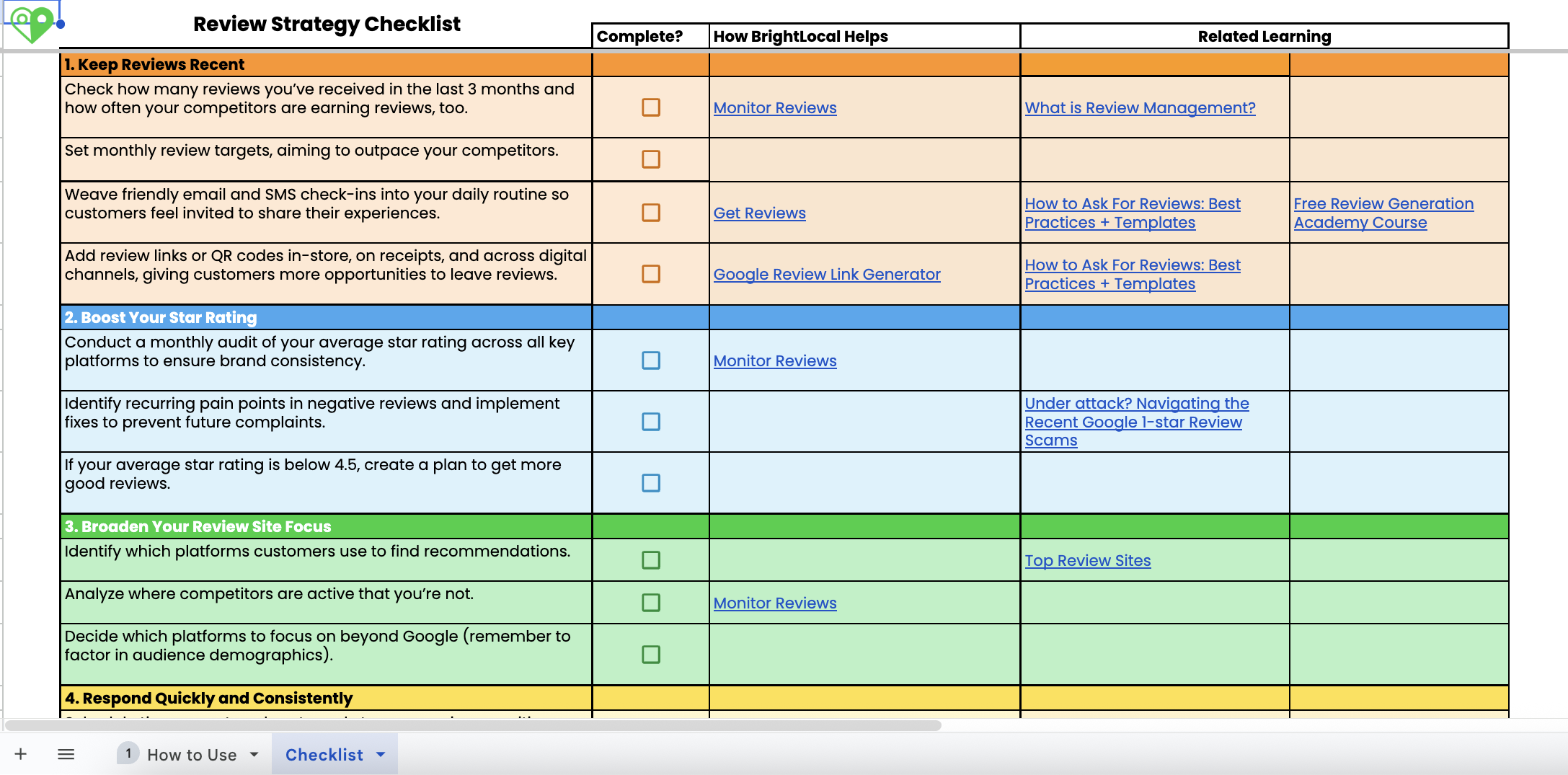
Ensure no feedback goes unnoticed. Download this free Review Strategy Checklist to manage client reviews with ease.
1. Use star ratings to identify easy-win prospects
Star ratings are a strong hint that a business could be neglecting its online presence. With 31% consumers only using businesses with 4.5 or more stars, low-rated businesses present a clear opportunity for agencies to deliver a quick impact.
Audit review profiles to find businesses below this threshold, and make it your business to educate them on the damage that could be being done to trust, visibility, and sales.
2. Set your sights beyond Google (shock horror!)
Google remains the most used review platform by quite a margin, but usage has dropped from 83% last year to 71% of consumers in 2026. But when Google’s wider ecosystem is broadened to include Gemini and AI Mode, usage rises to 76%, with some consumers only using Google’s AI tools for local searches.
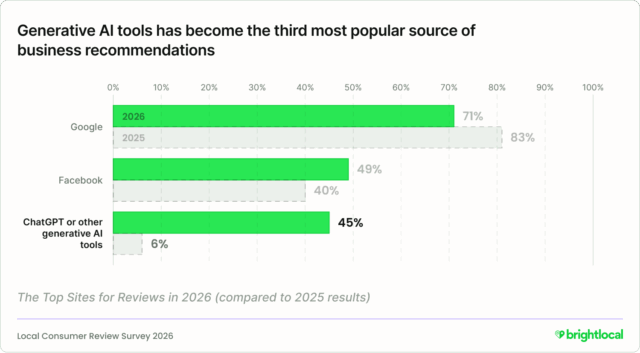
Consumers are increasingly turning to alternative sources when seeking local business recommendations. Video platforms like TikTok and YouTube are growing in popularity, while generative AI tools have seen a sharp rise from 6% of consumers last year to 45% today.
For agencies, looking beyond Google may feel a little scary, but this isn’t about abandoning it completely. Instead, treat broader review visibility as an added tactic that strengthens existing local marketing efforts. Audit where clients appear outside Google, identify gaps, and build consistent reviews across the platforms their customers actually use. This reduces over-reliance on a single channel and creates a clear point of differentiation from competitors focused on Google alone.
3. Become the AI expert your clients need
The Local Consumer Review Survey found a huge increase in consumers using generative AI tools for local business recommendations, jumping from 6% in 2025 to a whopping 45% now.
This is where agencies can step up. Clients don’t need buzzwords or bold predictions; they need reassurance that their business won’t be left behind. Upskill your team to understand how AI platforms source information and how to optimize clients’ online presence for them.
Accurate business information has always mattered, but it’s even more vital in the AI era. AI platforms pull data from listings, review sites, and websites, so check what AI “sees” for your clients and correct any inaccuracies or gaps.
Maintaining consistent citations across all platforms helps ensure information is reliable. Tools like BrightLocal can build and fix citations at scale, freeing up your time for strategic thinking and winning more clients.
4. Think of the full funnel
Even with strong reviews, 66% of consumers still seek additional information on websites, social channels, and other touchpoints to feel confident in their choice. Agencies should work with clients to map the full customer journey and ensure the experience reflected in reviews matches digital and real-life interactions.
Many small businesses still don’t have websites or Google Business Profiles, causing potential customers to drop off when verifying reviews. These early-stage businesses can be a prime target for many agencies, though they often need the most help for the lowest budgets. Quick wins in review management can deliver immediate ROI and open the door for longer-term projects.
5. Push clients to respond to reviews
This year’s report found that consumers expect quick responses to reviews, with 81% expecting a response within a week.
Agencies can manage clients’ online reputations, but the real impact happens when feedback is acted on. Writing responses for them may be tempting, but this misses the chance to improve the business and, subsequently, future reviews.
If the client can respond, make it easy: create workflows to streamline sign off, provide templates to tailor, or build customized AI agents to speed up replies. Even if they’re the ones responding, monitor incoming reviews and regularly report trends so they can act on feedback.
If the client can’t take on the responsibility, step in as first responder. Closely monitor review notifications and create clear processes for escalations and sign-offs. Most importantly, make sure feedback is shared so it drives improvement, rather than sitting hidden on a dashboard.
These five actions show how agencies can help clients turn reviews into real results and attract ideal clients in 2026. But these steps are just the beginning! Explore the full Local Consumer Review Survey to understand the latest online review trends.