






Fake reviews are nothing new. Back in 2017, the Local Consumer Review Survey first asked consumers how often they spotted fake reviews. Nearly a decade on, they’re still troubling businesses.
With the 2026 Local Consumer Review Survey, we took a different approach. Instead of trying to find out how likely consumers are to recognize them, we wanted to find out what consumers think should be done about fake reviews.
Here, we break down the key findings on fake reviews and share what local marketers need to know to protect their reputation.
No One Knows Who’s Responsible for Fake Reviews
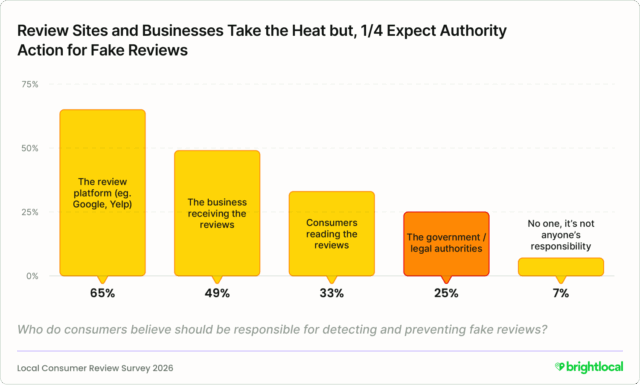
When it comes to fake reviews, one thing is clear: consumers aren’t sure who should take responsibility. 93% of people think someone should be responsible for detecting fake reviews, though accountability is split. Many consumers think multiple groups should share the load, with 50% thinking more than one group should act, and 5% believing review platforms, businesses, consumers, and officials should all share responsibility.
Consumers are most likely to think review platforms should be responsible for fake reviews. While review sites remove obvious fakes, realistically, they can’t catch them all.
Scammers are getting more sophisticated, using AI to create authentic-sounding reviews at scale, so the average review reader may have no idea if a review is fake. In the past, signs of a fake review were often easy to spot: poor spelling, nonsensical content, vague details, or unnatural writing styles. AI can smooth over these issues, making reviews look much more believable.
Businesses need to take responsibility for their own reviews. Only they can spot the subtle signs that indicate a review is malicious, spammy, or written by someone with no real experience of your business.
Consumers expect businesses to be proactive. Fake reviews can mislead potential customers and put them off choosing your business. Even if a review looks clearly fake, failing to address it could make people think your business is inattentive or inactive. Taking responsibility and acting quickly helps maintain trust and protect your reputation.
Consumers Expect Consequences for Fake Reviews
Consumers take the integrity of online reviews very seriously. Fake reviews aren’t just a nuisance; they can make or break a sale without a customer ever getting in touch. And as AI-generated content spreads, consumers increasingly need to be aware of misinformation or risk being duped.
Nearly everyone agrees that businesses shouldn’t get away with fake reviews, with 97% thinking there should be consequences. Interestingly, people aged 18-29 are more likely than other age groups to think no punishment is needed, suggesting that younger consumers may be a little more lenient on fake reviews (or, just haven’t been burned yet!)
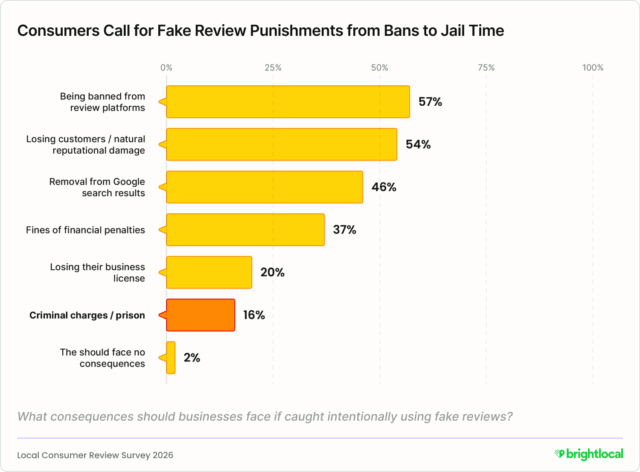
Some are clear about what they want, while 68% favor multiple consequences. Just over half think businesses should lose customers naturally due to fake reviews, with consumers over 60 more likely to support this approach.
Many consumers support bans from review platforms or Google search results, expecting platforms and search engines to protect the integrity of online information. Many review sites have strict guidelines against fake reviews, but complete bans are pretty rare. Losing access to these major marketing channels would be disastrous, and stricter enforcement could discourage businesses from using fake reviews.
A smaller but vocal group demands more severe consequences. 37% believe businesses should face financial penalties if caught. In the US, this is now a reality as the FTC’s Final Rule on Consumer Reviews made buying or posting fake reviews illegal, with significant fines for those caught.
16% of consumers favor a more hardline approach: criminal charges or jail time. While this isn’t supported legally, it does highlight how strongly some people feel about review integrity. Consumers aged 45-60 are particularly strict, as the most likely to support criminal consequences or the loss of a business licence.
Past experiences also shape expectations. Consumers who have regretted spending more than $5,000 after relying on reviews are more likely to advocate for harsh punishments. Likewise, the most engaged review readers and writers also want the biggest consequences for fake reviews.

"Consumers have real concern and anger over fake reviews"
Myles Anderson, Co-founder and CEO at BrightLocal
“While it’s encouraging that review usage remains so stable, we can’t ignore the growing undercurrent of consumer anger. In an era where it’s becoming harder to trust what we see and read, people are losing patience with the manipulation of reviews. They aren’t just wary anymore, they’re frustrated and, in many cases, truly angry.
The data shows a fascinating shift in where consumers lay the blame. They hold the big review platforms to a high standard, but they are increasingly turning their sights on the business owners themselves. When you see a significant number of people suggesting that generating fake reviews should be a ‘jail-able’ offense, you realize we’ve moved past minor annoyance. Consumers are calling for maximum penalties to protect the integrity of trust. As an industry, we have to recognize that while the value of reviews is cemented, the tolerance for bad actors has completely evaporated.”
Local Marketers Need to Take Action
Businesses that actively monitor reviews are in a strong position to reduce the impact of fake feedback.
This snapshot from the 2026 Local Consumer Review Survey shows that fake reviews are seen as more than a minor annoyance. Consumers expect accountability, and many place that responsibility firmly on the shoulders of businesses. So what should local marketers do?
1. Get informed and upskill
For businesses that aren’t in control of their fake reviews or unsure how to spot them, now is the time to learn with the help of BrightLocal:
- How to Spot Fake Reviews, and What to Do About Them
- How to Tackle Fake Google Reviews
- How to Deal with Fake Yelp Reviews
These articles give in-depth advice on recognizing and tackling fake reviews, making them a great place to start.
2. Start monitoring your reviews
Regularly check all platforms for suspicious reviews. Make sure you’re signed up for email notifications so you don’t miss any new reviews. You can also monitor competitors’ reviews to make sure there are no fake positive reviews that could inflate rankings.
3. Track reviews using software
Investing in review management software can save time monitoring reviews for fake feedback. This is especially useful for businesses or agencies managing multiple locations that may miss reviews in a busy inbox.
4. Speak to an expert
Businesses may want to consider investing in expert support from reputation management or local marketing specialists. These experts can help with review monitoring across platforms, flagging suspicious reviews, and managing the often complex reporting process.
5. Respond to reviews
Consumers may not be able to spot clever fake reviews, so it’s important for businesses to stay on top of responding to them. Failing to act quickly can allow misinformation to influence potential customers, so responding publicly and quickly can help set the record straight until the review can be removed.
6. Maintain integrity
Staying compliant and maintaining your integrity is essential. Even if jail time and widespread bans aren’t a reality right now, consumers view them very negatively. Avoid posting fake reviews at all costs; doing so risks damaging your reputation. You could also land yourself with a fine, so make sure you’re aware of the local laws affecting online reviews.
7. Read the full report
Fake reviews are just one part of a healthy reputation. Discover how consumers are using reviews and what they expect from businesses by reading the full Local Consumer Review Survey! Packed with tips and benchmarks, it’s your guide to mastering reviews in 2026.