

How to Spot Fake Reviews, and What to Do About Them
Last updated on February 11th, 2026
Fake reviews aren’t just a frustration or inconvenience. They have a real bottom-line effect that no local business can afford to ignore:
- Approximately 30% of all online reviews are estimated to be fake
- Review fraud is responsible for around $300 billion of harm to US consumers
- Google blocked 240 million fake or policy-violating reviews in 2024
Fake reviews erode consumer trust in a local business. Whether it’s via Google, Amazon, Yelp, or Facebook, negative reviews could cause your local search ratings to suffer, costing you search visibility and putting you at a disadvantage against competitors. They also undermine your efforts to build a strong review profile, something that could have taken years to achieve.
Public patience for these tactics has reached a breaking point, too. According to the most recent Local Consumer Review Survey:
- 97% of consumers believe businesses should face punishment for fake reviews.
- 57% of consumers believe businesses caught using fake reviews should be banned from review platforms entirely.
And now, fake reviews are not just unethical, but illegal too. The 2024 Federal Trade Commission’s Final Rule on Consumer Reviews made it illegal to create, buy, or manipulate fake reviews. It also gave the FTC the authority to impose significant fines on violators, making it more important than ever to understand how to spot fake reviews.
What are fake reviews?
When you think of fake reviews, you might picture a business owner writing a few harsh comments about their biggest competitor. But fake reviews are far more widespread and sophisticated than that.
A fake review is any rating or comment that doesn’t reflect a real customer experience. They can unfairly boost a business or harm a competitor. There are several common methods used to create fake reviews:
Insider Reviews
Insider reviews are probably the most well-known type of fake reviews. They come from friends, family, or employees posting positive reviews to help a business look better or make a competitor look worse, even if they have not actually used the product or service.
These reviews are more likely to come from a genuine desire to help a friend’s business succeed, rather than an attempt to actively damage a competitor. While these may seem less worrying than some of the big fake review networks, they are still illegal in the USA.
AI-generated Fake Reviews
The sharp rise of AI tools like ChatGPT has made it much easier for fake reviewers to churn out convincing reviews at scale. A study published in ScienceDirect highlights that AI-generated reviews are often less specific, exaggerated, use repetitive language, and show lower levels of empathy. Of course, using AI doesn’t automatically make a review fake, but it has made it far easier for fake reviewers to post en masse.
Review Extortion Scams
Review extortion scams happen when someone threatens to post negative reviews, or refuses to remove ones they’ve already written, unless a business pays them or provides free products.
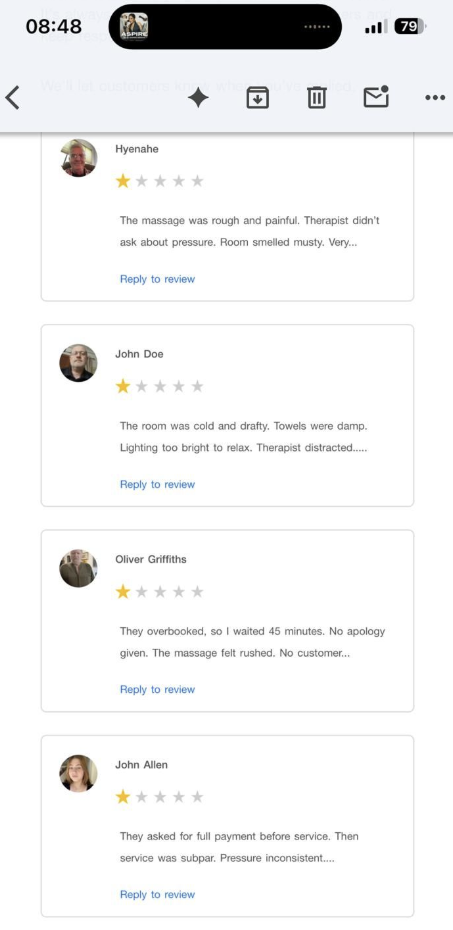
These attacks often involve multiple fake one-star reviews appearing in a short period, sometimes including phone numbers or suspicious profiles. Businesses should never pay up and instead report the scam reviews to the platform.

Incentivised Reviews
Some businesses offer gifts, discounts, or payment in exchange for positive reviews. While this doesn’t automatically mean a review is fake, it increases the risk of overly positive or misleading feedback. Asking for only positive reviews is against some review platform rules (including Yelp and Google).
And guess what? It’s also now illegal in the US.
Fake Review Brokers
Fake review brokers (sometimes known as review farms) are organized networks that hire people or use bots to post fake reviews from multiple accounts.
While these services can temporarily boost visibility, they carry a high risk. Platforms like Google regularly detect and remove inauthentic reviews, and businesses associated with brokers may face account suspensions or even fines.
Review Brushing Scams
In review brushing schemes, sellers send low-value products to random people to create “verified” purchases and leave five-star reviews using consumers’ real names and address data bought or found online, or through hijacked accounts.
Which? found more than one million UK shoppers receiving items they never ordered on Amazon, only to see fake reviews linked to their names. This manipulation distorts product ratings and misleads consumers, undermining trust in online reviews. Amazon has stated that review brushing is prohibited and advises customers to contact customer service immediately if they receive unsolicited packages.
Review Bombing
Fake review campaigns, sometimes called review bombing, happen when people who haven’t used a business flood it with negative or prank reviews. These can be triggered by a news story, a social media trend, or an attempt to “cancel” someone.
While they can feel overwhelming in number, they are usually easier to spot than genuine reviews and easier for review platforms to take down once reported.
Why Businesses Buy or Post Fake Reviews
Fake reviews usually have a clear goal. Some are posted by competitors trying to boost their own ratings or damage a rival. Others come from disgruntled customers, ex-employees, or even people with personal grudges. Occasionally, it’s done just for fun, especially if your business is well-known or goes viral.
Many businesses don’t write fake reviews themselves. Instead, they hire third-party services or use social media groups where users post reviews for a fee. Buying and selling reviews is now big business, with Amazon launching legal action targeting more than 11,000 websites selling fake reviews.
Understanding how to spot fake reviews is essential. Fake reviews can mislead customers, damage your reputation, and even affect local SEO rankings.
How to Spot Fake Reviews
With bad actors getting ever more inventive when churning out fake reviews, it pays to know what a fake review really looks like. As a small business owner, being able to identify malicious or phony feedback is the first step to removing fake reviews.
1. Look for clusters of reviews posted simultaneously
Multiple reviews appearing at the same time could be a sign that something is amiss. If the timing for several reviews matches, it may be that the business has purchased feedback, paid for five-star listings, or offered incentives such as cash or free products to customers in exchange for their rating.
If you’re a local business that has been subjected to a series of poor reviews in quick succession, checking if the time of the submissions is roughly the same could be an indication that they are fake. If that’s the case, it may be that a competitor is trying to drive down your star ratings.
2. Be wary of over-the-top descriptions
Receiving complimentary feedback about your business, your team, and your services is a bonus of being proactive about building your review profile.
However, comments that seem incredibly over-the-top, enthusiastic, and effusive could be suspicious. If the language seems to be very exaggerated in its praise, it may be that the reviewer isn’t genuine.
According to research conducted by MIT, deceptive reviews (those submitted by consumers who actually haven’t made a purchase from the business being reviewed) have a tendency to use repeated exclamation points such as ‘!!’ and ‘!!!’ in the text of the review.
3. Look for specific details
A lack of detail and specific information also gives food for thought when it comes to deciding if a rating is genuine or not. While most of us will admit to leaving just a star rating and perhaps a word or two when we’re pushed for time, a lack of detail can also indicate the person writing the review doesn’t have first-hand experience with that product or service.
4. Be alert for words such as refund or discount
Another warning sign that a competitor could be manipulating their review profile to artificially boost their local business is the use of words suggesting monetary payment or free products. Be alert for words such as gift code, voucher, discount, and refund, which may suggest that the reviewer has been paid or coerced into leaving a positive rating.
Incentivizing reviews is against most platform guidelines.
5. Look for very similar reviews
If a local business has several reviews, but many of them are worded in much the same way, it’s likely you’re looking at a series of fakes. Genuine customers sharing their genuine experience of a business will naturally write in different ways, and use different styles of language and varied vocabulary. Fake reviews are often created and posted in bulk, so they are little more than duplicates.
6. Check for unnatural writing styles
Fake reviews often stand out through how they’re written. Watch for all-caps titles, poor grammar, or repetitive phrases like “the best” or “highly recommended.” These can signal a review written for algorithms, not people.
Reviews overloaded with photos or videos can also raise suspicion. Research from Which? found that incentivized reviewers are often asked to include photos and videos. Finally, check the reviewer’s profile. No profile picture, little activity, or a pattern of similar glowing reviews can all hint at fakes.
Spotting Fake Reviews on Google
Google reviews are one of your most valuable online assets as a local business. Not only is it known to be a local SEO ranking factor, but it also directly impacts consumer decision-making.
Knowing how to spot a fake Google review can therefore help your business to weed out unscrupulous feedback and protect your online reputation.
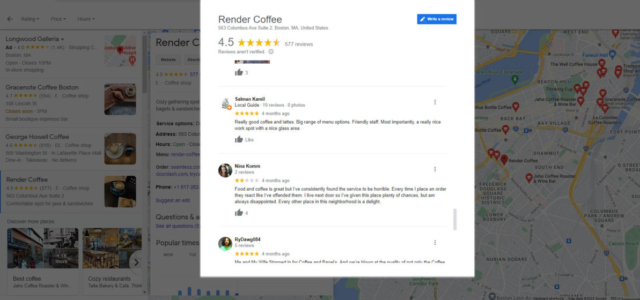
1. Check the reviewer’s Google profile
New accounts are often created just to post fake reviews, so they’ll usually have only one or two ratings to their name. You’ll see the number of Google reviews they have posted displayed as a number under the account holder’s username.
2. Examine the reviewer’s activity
As well as seeing the number of reviews a user has posted, you can also see the reviews themselves.
Check if the places reviewed are within the same local area. If most places are in entirely different locations, such as different states on the other side of the country, they may not be genuine.
3. Inspect the images
Sometimes fake reviewers are asked to include images to make their feedback look real. If the photos don’t seem related to your business or look out of place, that’s a strong clue the review isn’t genuine.
4. Look at timings
From the user profile, you can also check the frequency of review postings. Has the reviewer posted clusters of reviews at the same time, or are they sporadic? A flurry of reviews posted at the same time suggests that the reviews may be fake.
5. Cross-reference with your sales logs
Compare your sales logs with the name of the person leaving the review to determine if they are a genuine customer. You don’t have to be a customer to review a business, but if you have lots of new fake reviews from people you’ve never heard of, this could be a fake review attack.
6. Look at the reviewer’s profile picture
Fake reviewers often won’t share too much personal information on the profiles they create. Along with other red flags, the lack of a profile picture raises suspicions. Likewise, very generic or cartoon images can also indicate that the reviewer is attempting to hide who they are. However, it’s not required to add a profile picture, so many reviewers may have chosen not to upload one.
7. Review the details carefully
Real reviews usually include accurate details about the experience. Check if team members or services are mentioned correctly, or if the review refers to things you don’t offer. Inaccuracies are a tell-tale sign that the review has been created by someone without first-hand experience of your business.
Further guidance on Google Reviews:
How to Spot Fake Facebook Reviews
Facebook remains one of the most important platforms for local businesses. Knowing how to spot fake Facebook reviews is essential for protecting your business and maintaining trust with your audience.
1. Look for vague text
Genuine reviewers will often pick out specific aspects of their experience, whether good or bad, to explain why they recommend (or do not) that business. Very brief, vague comments can be one clue that the recommendation is fake.
2. Watch out for over-the-top compliments
Excessive superlatives or language that feels exaggerated often indicate a review was written to artificially boost ratings. Descriptions that sound too good to be true are a tell-tale sign that you’re looking at a fake review.
3. Check the reviewer’s profile picture
Much like with Google reviews, the lack of a profile picture or the use of a cartoon image instead is another warning sign that the reviewer isn’t genuine. Facebook reviews are tied to the reviewer’s Facebook account, so it’s much more likely to be a profile picture of a real person.
4. Explore the friends list
Clicking on the reviewer’s profile picture will take you to the profile page. How many friends are on their friends list? If the profile doesn’t have any Facebook friends, or only very few, you have another indication that the review is fake.
Spotting Fake Reviews in Specific Industries
While all consumer reviews matter, in some industries, being able to trust the content of a review is even more important. For professions such as lawyers, healthcare workers, real estate brokers, and so on, dishonest reviews could have serious consequences, including financial loss.
How to Spot Fake Hotel Reviews
Hotels rely heavily on reviews to attract guests, but not all ratings are genuine. Be cautious of all five-star reviews, as even top properties will have a mix of ratings. Check the most recent reviews to see what guests are actually experiencing, and look for comments that differ sharply from the general consensus. Comparing reviews across multiple platforms can help spot inconsistencies.
Suspicious reviews can be reported to TripAdvisor. Hallmarks of fake reviews include a large number of five-star reviews from users who have only submitted one review, and reviews from lots of users who haven’t reviewed other locations. Buying reviews, offering incentives for reviews, or posting reviews for your own business are all against TripAdvisor review policies.
How to Spot Fake Reviews in Real Estate
With intense competition and huge commissions at stake, it’s no secret that real estate can be a cutthroat business. If you suspect a competitor may be inflating their profiles with fake reviews, watch the language closely. Reviews filled with acronyms or excessive industry jargon can be suspicious.
Check whether the review mentions the property, as genuine reviewers usually reference the home they bought or rented. Also, look for honest feedback about challenges or delays. Buying a house is seldom straightforward. If every review claims the process went perfectly, it could indicate fake or incentivized reviews.
How to Spot Fake Reviews for Healthcare Professionals
Fake reviews are especially concerning in the healthcare industry, where patient health could be put at risk by unscrupulous rivals. The description of the service should be realistic and match the actual care provided. It’s unlikely that anyone will wax lyrical about teeth cleaning at the dentist, so a review that is extremely complimentary should raise a red flag.
Reviews that repeatedly mention other healthcare providers may indicate that the reviewer has been paid to paint the rival in a bad light. Likewise, reviews that mention certain branded products multiple times should be treated with a degree of suspicion.
What to Do When You Spot Fake Reviews
So, you know how to spot a fake review, but what steps should you take next to ensure your rivals aren’t gaining an unfair advantage?
Each platform has its own specific procedure that you’ll need to follow if you suspect a review is fake, whether that’s a review that impacts your own profile or is benefiting a competitor.
1. Respond Professionally
Before reporting a review, consider replying calmly and courteously. Even if the review is fake, a measured response demonstrates that you take feedback seriously. This is especially important on platforms like Google, where removal can take time. Use clear, professional language to address the concern without getting emotional. Don’t be afraid to (politely!) say you’re reporting the review as you don’t believe it’s real, so readers know to take it with a pinch of salt.
If you’re monitoring your reviews using a tool like BrightLocal, you should be able to both spot them quickly and respond instantly.

2. Report the Review
Report the review through the review platform’s official tools. Sometimes reports aren’t removed immediately, so be prepared to appeal and submit supporting details, such as incorrect references or suspicious reviewer activity. Proper documentation strengthens your case.
3. Get More Real Reviews
The best way to protect your reputation is by getting more reviews. Encourage happy customers to share their experiences naturally and often. A stream of authentic reviews balances out any misleading ratings and shows future customers that your business consistently delivers great service.
The Consequences of Fake Reviews
With reviews playing a significant role in both sales and SEO, fake reviews are becoming increasingly common, but the risks are also growing. This raises several issues for businesses and consumers alike, with consumers increasingly likely to be faced with fake reviews and businesses increasingly being placed at a disadvantage if they don’t join unscrupulous competitors in buying or faking reviews to win visibility.
However, there is a concerted effort to crack down on fake reviews, so any investment in fake reviews is likely to backfire sooner rather than later. Fake reviews come with serious risks for any business.
In the USA, creating, buying, or manipulating reviews is illegal under the FTC’s 2024 Final Rule on Online Reviews. This means individuals or groups caught posting fake reviews face substantial fines.
As well, penalties are immediate and visible across different review platforms. Yelp maintains a Wall of Shame highlighting companies caught offering or paying for fake reviews, warning potential customers of dishonest practices. Google takes action too, putting accounts in “review jail,” which can block new reviews from being shown, as well as showing a “suspected fake reviews” label on your Google Business Profile.
Posting a fake review might seem harmless or even helpful, but it’s never worth it. The risks are real, and the fallout can hit your business hard. Do the right thing: keep things authentic, grow your reputation naturally, and stay in control of your story online.


